Archivo de la categoría: Sin categoría

Cómo aprovechar la crisis del coronavirus para mejorar y potenciar el parque de grúas.

La llegada del coronavirus ha supuesto un reto sin precedentes para todo el tejido empresarial mundial. Ante una realidad tan complicada, las empresas han tenido que adaptarse en un tiempo récord y maximizar sus recursos como nunca antes lo habían hecho. A pesar de ello, son muchas las empresas que desgraciadamente han visto frenada su producción.

A través de este artículo queremos señalar que, aunque es cierto que la situación actual no es la mejor, esta crisis es también una oportunidad para mejorar  y potenciar el parque de grúas de las empresas sin que ello suponga perturbaciones en su producción. A continuación contamos cómo podemos ayudar desde GH Cranes & Components.

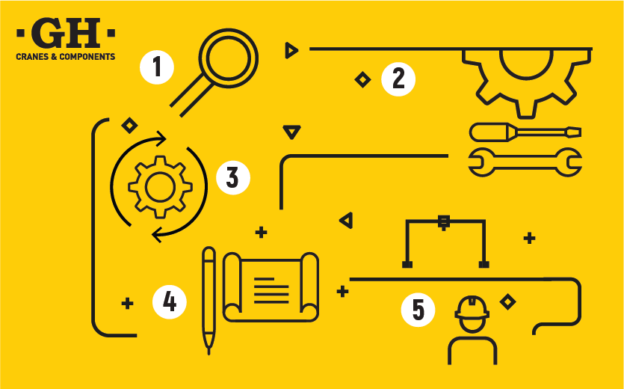
  1. Inspección y revisión de grúas.
    Ahora que la producción se ha visto disminuida en muchos talleres y plantas industriales es un buen momento para prestar atención a la seguridad y revisar las  grúas. En GH Cranes & Components disponemos de programas de inspección y mantenimiento personalizados para todas marcas de grúas y polipastos. 
  1. Reparación de grúas
    Son muchas las empresas que tenían pendiente reparar una grúa antes de la crisis y no encontraban el momento debido al exceso de trabajo. Desde GH Cranes & Componentes recomendamos aprovechar ahora que la producción se ha ralentizado para poner a punto todas las grúas.  Para ello, contamos con técnicos especializados en la reparación de equipos de elevación.
  1. Actualización de grúas y montacargas
    Sabemos que por culpa del coronavirus muchas empresas han visto reducido su presupuesto para nuevos compras. En esos casos, recomendamos aumentar el rendimiento de los equipos ya existentes con actualizaciones. Así, GH Cranes & Components ofrece servicios de modernización para todas las marcas de grúas.
  1. Planificación y diseño de proyectos de grúa.
    En estos momentos que muchas empresas deben replantearse su futuro, cabe recordar que una grúa es un inversión a largo plazo capaz de optimizar el manejo materiales y aumentar la productividad.  Así, en GH Cranes & Componentes tenemos un completo equipo de ingenieros y diseñadores preparados para convertir todos los planes en realidad.
  1. Optimización de la cadena de suministro
    Las crisis ha hecho que cada pedido deba maximizarse al máximo, tanto en márgenes como en rentabilidad. Dado que ningún contratiempo debe frenar la producción, resulta fundamental asegurarse de tener en todo momento las piezas de repuesto y accesorios necesarios. Para optimizar las cadenas de suministros de las empresas, GH Cranes & Components ofrece repuestos OEM, repuestos de rendimiento y piezas de grúa equivalentes.
Minimize Your Steel-Building Costs with Overhead Cranes Built from Box Girders

One of the most effective ways to lower the cost of your steel building project is to install overhead cranes built from box girders instead of structural beams. These cranes can be both lower capacity and higher capacity cranes.

Box girders
A box girder is an enclosed, four-sided tube made from multiple walls. Unlike an I-beam or H-beam, a box girder contains multiple vertical webs. Double girder cranes built from two box girders usually feature a pair of box girders with the trolley and hoisting mechanism operating on rails attached to the tops of each box girder. Single girder cranes are built using a single box girder with the trolley and hoisting mechanism running on the lower flange of the box girder.

5 Key advantages of box girder cranes in steel-building construction
Some overhead crane manufacturers, such as GH Cranes & Components, custom build their cranes from box girders rather than wide flange beams. The advantages of this technique are many.

  1. Lower cost of steel: Building with box girders requires less steel. One of the main costs of an overhead crane is the materials used in its manufacture and the less steel that is needed, the lower the cost of steel in the crane.
  1. Lower weight: Overhead cranes built from box girders are also lighter than comparable cranes built from structural steel. Columns can be lighter weight, runway beams can be lighter, and the building structure can be a lighter weight overall. 

    Also, the lower weight of the box reduces the structural requirements of the runway design by lowering the crane loads on the runways and support columns.

  1. Better hook height: Another advantage of box girder cranes, whether single girder or double girder, is that they enable you design the girder depth to improve hook height.
  1. Greater loading capability: A further advantage of box girder cranes is that they possess greater loading capabilities and are able to span longer bridge distances than their structural-steel counterparts.
  1. Greater design flexibility: Steel buildings need to be designed to loading requirements. When you determine the load of your crane, you also consider the dead load (on the building all of the time) and the live load (on the building when the crane is lifting or moving a load). The advantage of overhead cranes built from box girders is that they give you more design flexibility, since they are lighter than comparable cranes built from wide flange beams.

Conclusion
If you are getting ready to design or erect a steel building, you likely understand that a number of factors affect your cost of materials.

One of those factors is the engineering requirements for your building to meet local wind, snow and seismic code requirements as well as loading requirements. But have you considered that the type of overhead crane you install in your steel building also affects your price?

Consider installing an overhead crane built from box girders. You’ll enjoy lower costs, greater design flexibility and greater loading capacity.


TIDEWAY IS BUILDING THE THAMES TIDEWAY TUNNEL – LONDON’S NEW SUPER SEWER

London is based on a 150-year-old sewage system built for a population less than half its current size.

Like many ancient cities around the world, most of London has a ‘combined’ sewage system, that collects not only the wastewater from sinks, showers and washing machines, but also the runoff of rainwater from roads, canals and sidewalks. Although the sewers remain in excellent condition, they lack the capacity to meet the demands of modern London. As a result, millions of tons of untreated sewage spills flow into the River Thames each year. To improve this sewerage system, the Tideway company is building a 25 km tunnel under the London River that will prevent tens of millions of tons of sewage from contaminating the River Thames every year. The Thames Tideway Tunnel will provide the needed capacity to address the current pollution problem and provide a suitable system for the future. However, by the tunnel, the sustainable drainage systems will also play their part. Although now, it is not viable to separate the sewer system, reducing the amount of rainwater entering the sewers will extend the useful life of the tunnel. This necessary expansion of London’s sewage network, to be completed by 2024, is being developed at 24 construction points in London. These range from Acton in west London to Beckton in the east, and many are located on the river bank in the city centre. For the development of this work, GH Cranes has designed and manufactured different lifting elements, commissioned by a UTE constituted between Ferrovial and Laing O Rourke (FLO, JV):

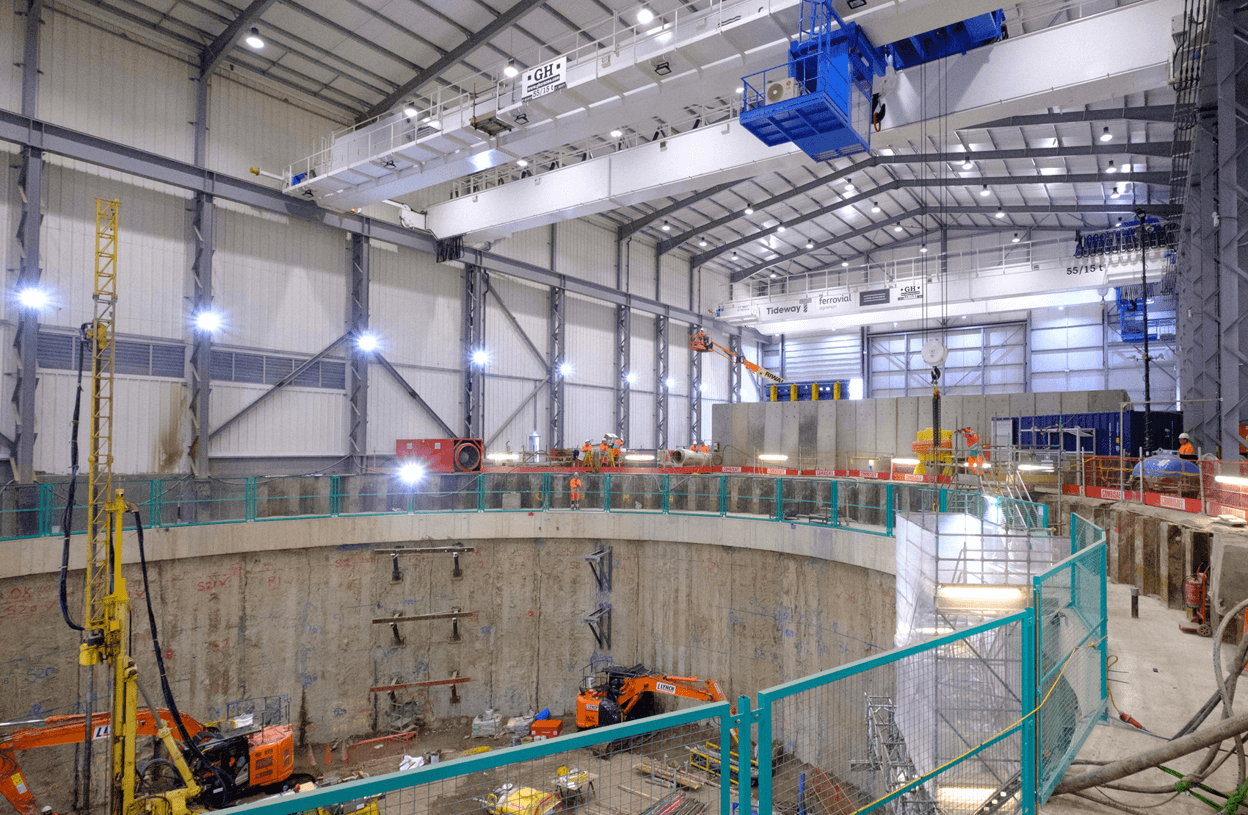
  • Two double rail bridge cranes with 55/15 Tn GHK open trolley capacity. With a light of 35m and an elevation height of 72.6m. These cranes are designed to work intensively in M8 workgroups. Both cranes are ready to work in tandem mode or independently. The cabin is suspended from the trolley for greater control over the load.
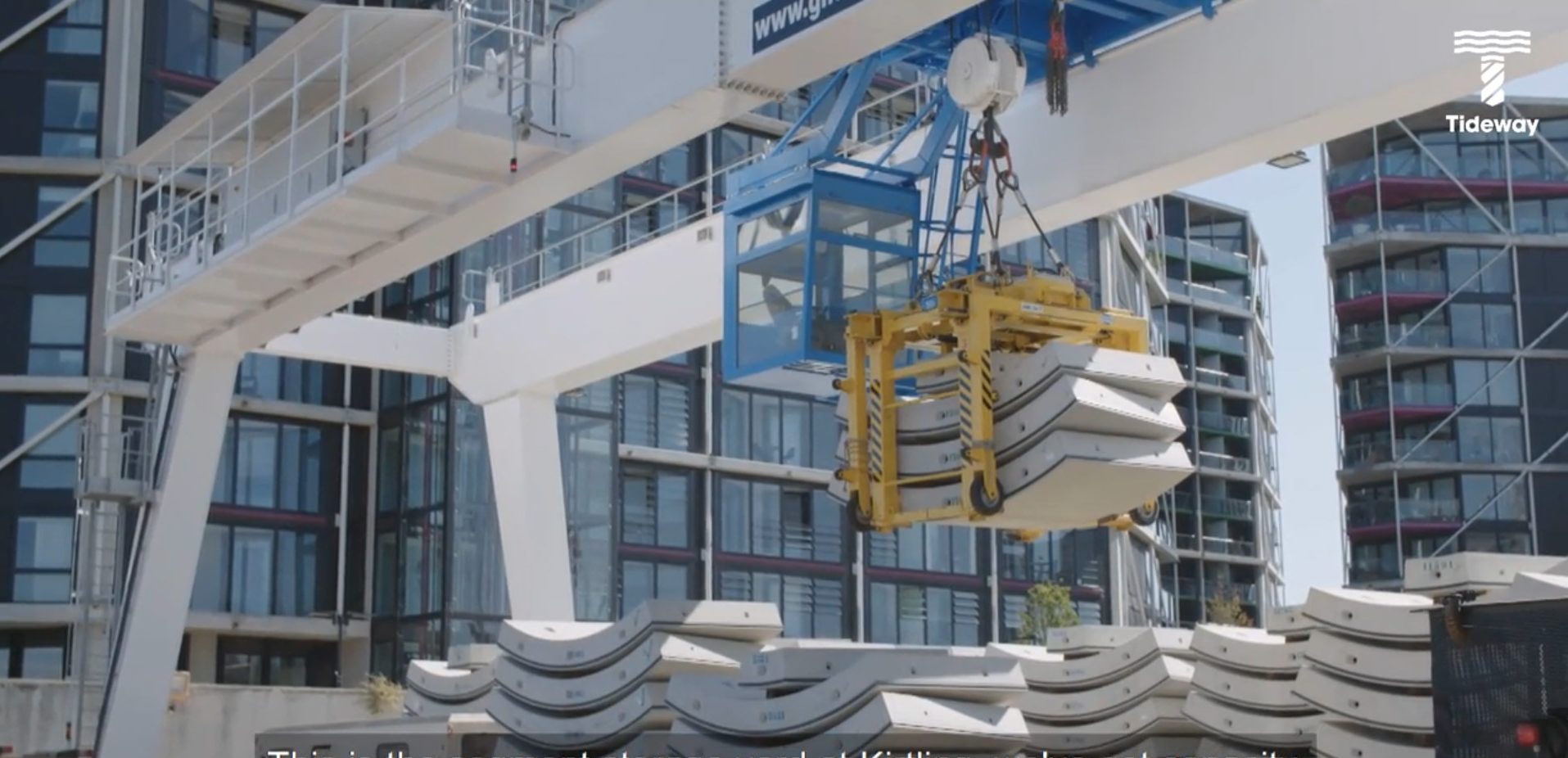
  • A gantry crane that has an open trolley of 30/15 Tn capacity that runs over a 26m route and another 3.5m overhang. Tris gantry is used among other things to feed the tunneler with the keystones for the lining of the tunnel walls.

The Tideway project will bring thousands of jobs, a rejuvenated river economy and completely new areas of public space. Bridge crane for Tideway is building the Thames Tideway Tunnel - London’s new super sewerGantry crane for Tideway is building the Thames Tideway Tunnel - London’s new super sewer Source: rendel-ltd – tideway